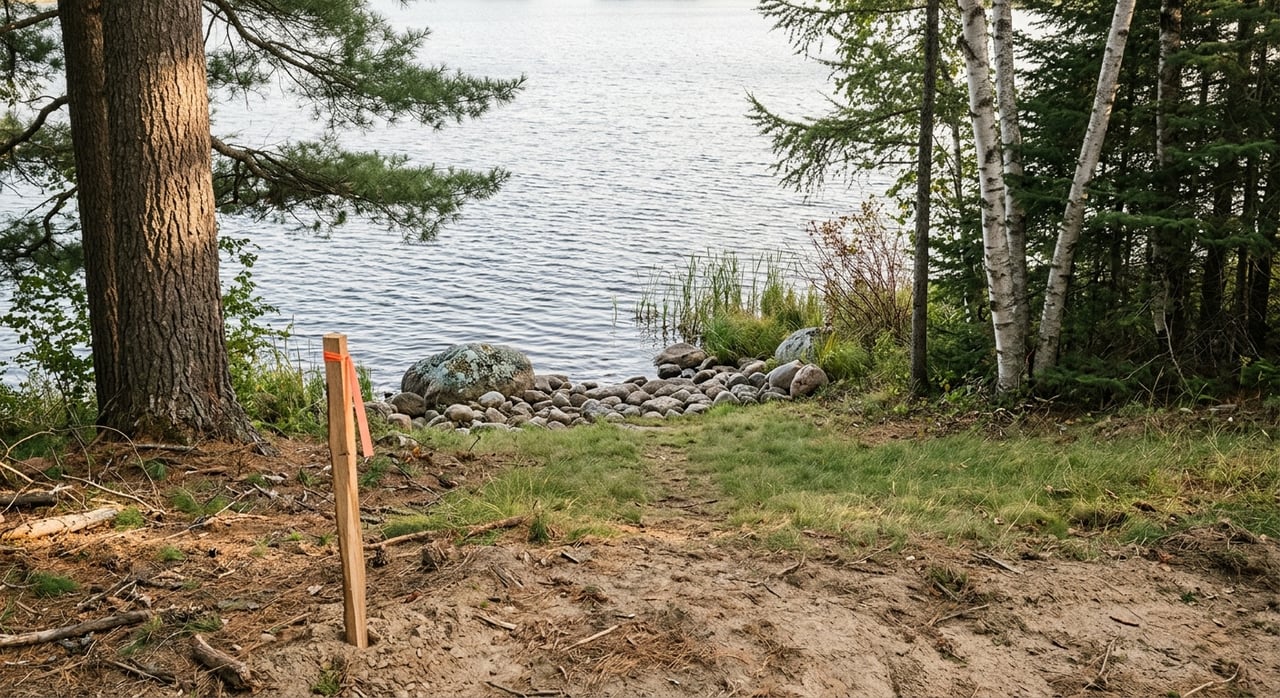
Buying a lake lot near Audubon can feel exciting right up until you realize the view is only part of the story. You may be picturing your future cabin, year-round home, or investment build, but the wrong parcel can create expensive surprises around setbacks, access, septic, and shoreline work. The good news is that with the right local due diligence, you can spot the difference between a beautiful lot and a buildable one. Let’s dive in.
Why lake class matters first
One of the most important details for any lake lot near Audubon is the lake’s shoreland classification. In Becker County, nearby lakes are not all treated the same. Lake Eunice is classified as General Development. Little Cormorant, Big Cormorant, Upper Cormorant, and Middle Cormorant are Recreational Development lakes. Bluebird is classified as Natural Environment.
That matters because lake class helps determine minimum lot size, lot width, and structure setbacks. In Minnesota’s shoreland rules, a single lot without sewer must generally meet these baseline standards:
| Lake class | Minimum lot size | Minimum lot width |
|---|---|---|
| Natural Environment | 80,000 sq ft | 200 ft |
| Recreational Development | 40,000 sq ft | 150 ft |
| General Development | 20,000 sq ft | 100 ft |
If sewer is available, some lots can be smaller, but the lake classification still affects what is allowed. This is why two lots with similar frontage and price can have very different building potential.
Compare lakes beyond the view
It is easy to focus on water clarity, sunsets, or frontage length. You should also think about how the lake functions day to day. Becker County’s public water access mapping shows access sites on lakes such as Eunice, Little Cormorant, and Cormorant, which means boat traffic and launch activity can vary quite a bit depending on the lake.
That difference can shape your experience and your future resale appeal. If you want a quieter setting, lake access patterns may matter as much as lot size. If you want easier boating activity and a more active recreation setting, a lake with broader public use may fit better.
Check the true buildable area
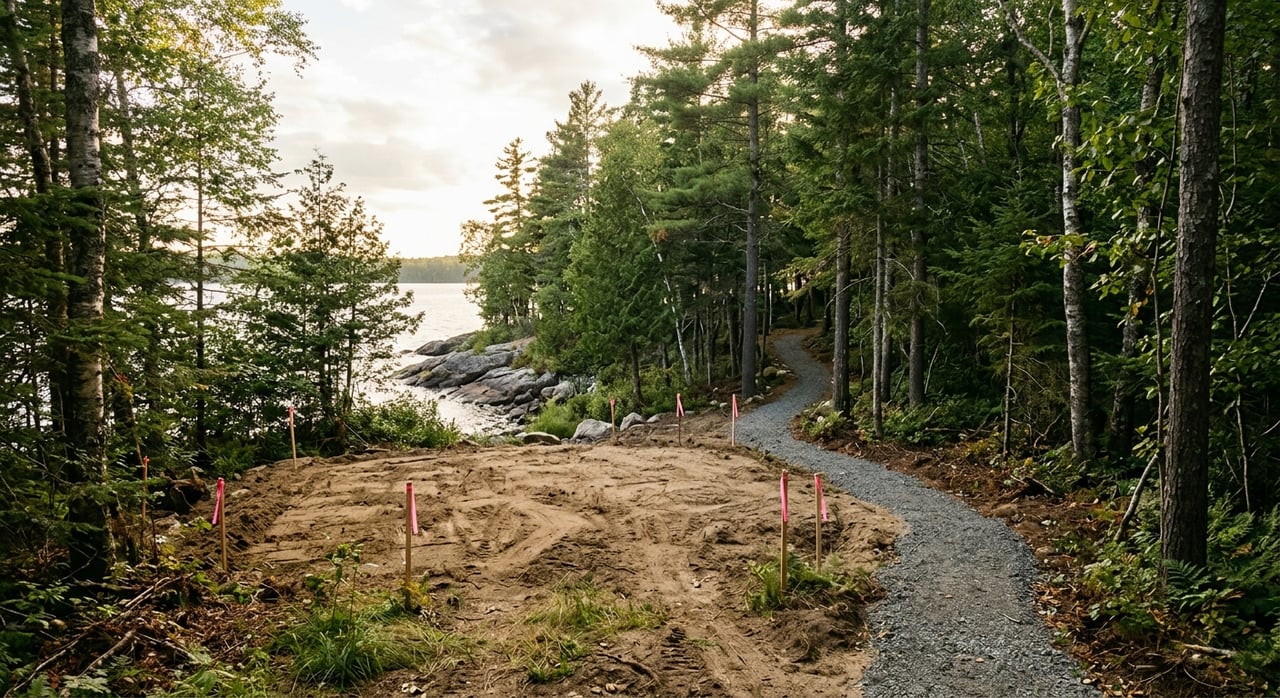
A lake lot can look large on paper and still offer a surprisingly tight building envelope. Once shoreland setbacks, road setbacks, bluff limitations, and septic placement are considered, the usable space may shrink quickly. That is why you should judge the parcel as a project site, not just a scenic piece of land.
Minnesota’s baseline structure setbacks for shoreland lots vary by lake class and sewer status. Natural Environment lakes require a 150-foot setback from the ordinary high-water level. Recreational Development lakes require 100 feet without sewer and 75 feet with sewer. General Development lakes require 75 feet without sewer and 50 feet with sewer.
Road setbacks matter too. State rules place structures no closer than 50 feet from the right-of-way of a federal, state, or county highway, and 20 feet from a town road. When you combine those limits with septic needs, driveway layout, and topography, a lot can become much less flexible than it first appears.
Evaluate shoreline condition early
Not all shoreline is equally usable or equally easy to improve. A steep bank, soft ground, or visible erosion can increase the cost and complexity of making the lot work for your plans. If you hope to create a beach area, stabilize the shoreline, or improve water access, it is smart to study those conditions before you write an offer.
Minnesota DNR guidance encourages natural shorelines, and some shoreline work may require permits or notice depending on the project. Beach sand blankets are only allowed under specific conditions. Riprap is meant to address existing erosion, not just for appearance. Docks, lifts, and access improvements also come with rules.
This means a shoreline that looks fixable may not be simple or inexpensive to change. In many cases, the most practical lot is the one where the existing shoreline already works reasonably well with your goals.
Verify legal access before anything else
A common mistake with land purchases is assuming that if a road touches the parcel, access is settled. Near Audubon, that can be risky. Becker County requires access approach permits for parcels that abut county roads or county state-aid highways, and the county highway department determines the final approach location.
You should also confirm that the road serving the lot is actually a legal access point. Becker County notes that its forest system roads are not officially public roads and do not provide legal access to private lands. That means you should verify recorded easements, road maintenance responsibility, snow removal arrangements, and whether a driveway route is truly permitted.
If the parcel is new or needs address clarification, Becker County also offers an E911 site-address request process. That can be useful when you are planning future construction or utility setup.
Plan for septic and well needs
For many lake lots near Audubon, utilities are not as simple as plugging into city service. In many cases, you are looking at a private well and private septic system unless the parcel sits near a municipal service area. That makes utility due diligence a major part of the buying process.
Becker County requires permits for new septic systems and compliance inspections for existing systems. The county’s zoning framework also requires a current septic certificate of compliance in relevant situations. Minnesota rules require private wells to meet state well-construction standards, and Becker County’s recorder information states that well disclosure certificates may be required at transfer.
In practical terms, you should ask early whether the lot can support the septic design your future home may need. You should also review any available compliance records and well disclosures before moving forward.
Know which local office has authority
A statewide rule can give you a starting point, but local review is what matters when you are evaluating a specific parcel. Minnesota’s shoreland rules set the baseline, yet local governments make the land-use decisions. For a lake lot near Audubon, that means Becker County Planning and Zoning should be part of your due diligence process from the start.
The county’s permit structure shows how many moving parts can affect a lake lot purchase. Depending on your plans, approvals may involve site permits for homes, garages, driveways, decks, porches, fences, and water-oriented structures. Some projects may also need land alteration permits, variances, or conditional use permits.
If a lot is being split or re-recorded, Becker County also notes a Land Revision Worksheet requirement tied to survey recording. For buyers looking at older parcels or changed legal descriptions, that extra layer matters.
Older lots may still be buildable
Some older lake lots do not meet today’s standard dimensions but can still be used without a variance in certain cases. Minnesota rules allow some lots of record that were legally created before current controls to be used as building sites if they remain in separate ownership and still meet sewage-treatment and setback requirements.
This is one reason title review, survey history, and plat status matter so much. An older parcel may be more useful than its measurements first suggest, or less useful if ownership history and compliance details do not line up. You should never assume an older lot is automatically buildable or automatically unbuildable without checking the record.
Review zoning and oversight layers
Lake buyers often focus on shoreland rules and forget about zoning. In Becker County, zoning districts include agricultural, residential, high-density residential, commercial, water-oriented commercial, industrial, and special protection. Zoning classification can differ from tax classification, so it is worth confirming both before you make decisions based on future use.
Some parcels may also sit within an added oversight area. For example, the Cormorant Lakes Watershed District covers Cormorant and Lake Eunice Townships in Becker County and serves the Lake Park Audubon community. That kind of district can add another review layer depending on the parcel location and planned improvements.
A practical checklist for buyers
Before you move forward on a lake lot near Audubon, make sure you have answers to these questions:
- What is the lake class, and how does it affect lot size, width, and setbacks?
- What is the parcel’s zoning district, and is there any special protection status?
- Does the parcel have verified legal road access?
- Is a driveway approach permit needed?
- Will the lot require a private well, septic system, or septic upgrade?
- Are there septic compliance records or well disclosure documents available?
- Has the shoreline had prior erosion work, riprap, beach fill, or dock-related improvements?
- What does the real buildable envelope look like once setbacks and utilities are mapped?
- Is there any added watershed district or local review authority involved?
Why local guidance matters
Lake lot purchases are some of the most rewarding and most technical deals in lakes country. You are not just buying land. You are buying a combination of shoreline conditions, access rights, utility feasibility, and future building options.
That is where a steady, process-driven approach makes a real difference. When you evaluate the parcel carefully before writing an offer, you can protect your budget, avoid unnecessary surprises, and choose a property that supports your long-term plans.
If you are considering a lake lot near Audubon and want a clear, local perspective on buildability, shoreline factors, and next steps, connect with Jason Bristlin. He helps buyers make confident decisions in Becker County with practical guidance grounded in the realities of lakes-country property.
FAQs
What should you check first when buying a lake lot near Audubon, MN?
- Start with the lake’s shoreland classification, because it affects lot size, width, and setback rules that directly shape buildability.
How do shoreland setbacks affect a lake lot in Becker County?
- Shoreland setbacks reduce how close a home or structure can sit to the water, and when combined with road setbacks and septic placement, they can significantly shrink the usable building area.
Can an older nonconforming lake lot near Audubon still be buildable?
- Yes, some lots of record created before current rules may still be buildable without a variance if they remain in separate ownership and meet setback and sewage-treatment requirements.
Why is legal road access important for a lake parcel near Audubon?
- Legal access affects whether you can actually reach and improve the property, and some roads that appear usable are not official public roads or do not provide legal private access.
What utility issues matter most for lake lots near Audubon, MN?
- Many lots rely on private wells and septic systems, so you should confirm permitting needs, available compliance records, and whether the site can support your intended home plans.
Who should verify buildability for a lake lot in Becker County?
- Becker County Planning and Zoning should verify parcel-specific rules and approvals, because local government administers the applicable shoreland and land-use decisions.